
How Much Does It Cost to Start an Online Store? Development and Ongoing Expenses

The cost of building an online store is only one part of your launch budget. To start accepting and fulfilling orders, you also need content, payment methods, delivery arrangements and a process for managing everyday operations.
After launch, you will have ongoing expenses for technical maintenance, order processing and attracting customers.
A useful question is: how much will it cost to launch your store and run it during the first year?
This article explains the main expenses, what to check in a development proposal and how to define a realistic starting scope.
What makes up an online store budget?
Divide your budget into three areas: preparation and development, ongoing operations and costs associated with each order.
| Cost category | What it may include |
|---|---|
| Initial investment | Planning, design, development, configuration and content entry |
| Ongoing expenses | Domain, hosting, maintenance, external services and marketing |
| Costs per order | Products, packaging, payment processing, delivery and fulfilment |
| Contingency | Unexpected tasks, returns and necessary changes |
This breakdown helps you compare proposals and identify which expenses will increase as sales grow.
What determines the cost of building an online store?
Two stores with the same number of products can have very different technical requirements. How you sell, your product variations and the processes behind each order all affect the scope.
Design and structure
Custom design involves more than the homepage. Categories, product pages, the basket and checkout all need to be planned.
For a larger catalogue, search, filters and navigation are important. For a smaller collection, the focus may be on presenting the products, materials and brand story.
The design should help customers find the right product and understand what they are buying.
Products, variations and content
The number of products affects content preparation and entry, but it is not the only factor.
One product may have several sizes, colours, stock levels and prices. Another may be made to order or require personalisation.
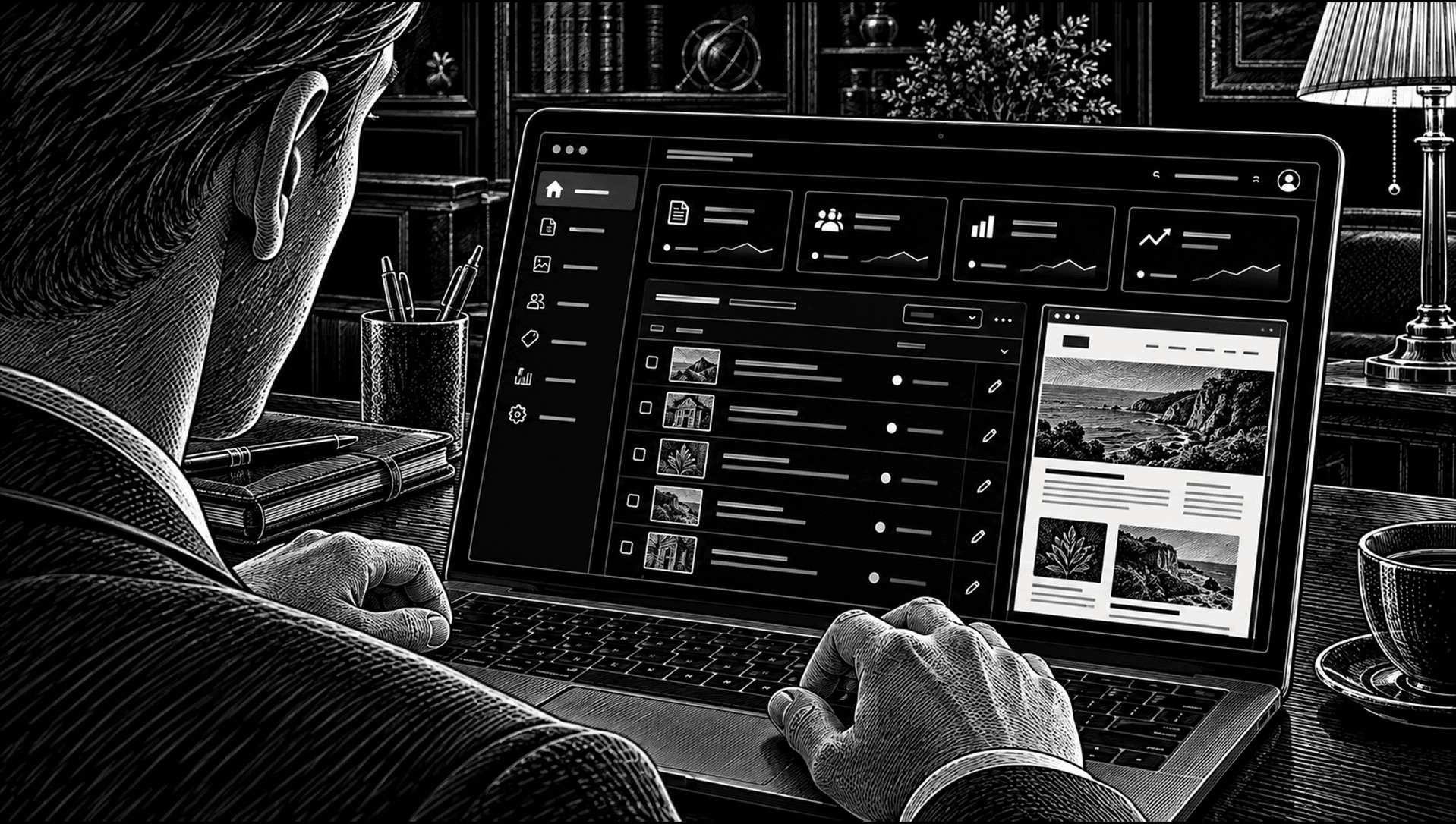
Clarify whether the proposal includes:
- Product entry or import.
- Category, variation and filter setup.
- Image preparation.
- Writing or editing product descriptions.
- Migrating content from an existing store.
A complete, well-organised catalogue makes this work more straightforward. Incomplete data requires additional preparation.
Payments and delivery
Your payment and delivery methods also affect development.
There is a difference between a fixed delivery charge and an integration that calculates shipping costs, offers collection points and generates shipping labels.
Payments need similar planning. The project should cover the selected methods, order statuses and how failed or interrupted payments are handled.

Integrations and specific business rules
Connections to inventory software, accounting systems or a CRM are assessed according to the capabilities of each service and the data that needs to be exchanged.
Additional scope may be required for:
- Different prices for business customers.
- Discounts based on quantity or customer group.
- Personalised products.
- Subscription orders.
- Multiple languages, currencies or markets.
- Specific delivery rules.
These requirements should be discussed before the proposal is prepared.
A ready-made platform or a custom online store?
When comparing solutions, consider the total cost of using them.
With a ready-made platform
Check the subscription, plan limitations and charges for additional applications, themes or features.
Clarify whether there are sales-related fees and how they differ from payment processing fees. Also check how you can export products, customers and orders if you decide to move later.
With custom development
The main initial investment is the development of the agreed solution. Hosting, technical maintenance and any external services remain ongoing expenses.
You should understand what you own, what you can manage independently and how future development is commissioned.
At Studio Hivenapse, we build custom online stores. You receive the developed code, with no subscription fee for a proprietary commerce platform and no sales commission charged by us.
Which initial expenses fall outside development?
Products and stock
If you sell physical products, budget for purchasing or manufacturing your stock.
Consider which items need to be available at launch, where they will be stored and how they will be replenished. These funds are separate from your website budget.
Product photography and descriptions
Customers need to understand what they are getting, including the size, material or intended use of a product.
You can provide the images and descriptions yourself or commission them separately. Clarify this early rather than assuming content production is included in development.
Brand identity and packaging
A new business may need a logo, visual identity and packaging design.
Order fulfilment also requires physical materials: boxes, mailing bags, protective packaging, labels and inserts.
Documentation and operational setup
Discuss the documentation, accounting support and requirements relevant to your products and markets with the appropriate professionals.
Adding text to a website and preparing that text are separate tasks. The proposal should clearly assign responsibility for each.
What ongoing expenses does an online store have?
Domain
Your domain needs periodic renewal. The cost depends on the extension and registrar.
Our clients purchase their domains in their own names and retain control over them. When the initial registration is discounted, check the renewal price too.
Hosting and technical maintenance
Your store needs infrastructure, backups, monitoring and updates.
At Studio Hivenapse, hosting and technical maintenance are included for the first three months. After that, our package starts at €50 per month and includes:
- Premium server infrastructure.
- An SSL certificate.
- Daily backups.
- 24/7 monitoring.
- Regular security updates.
New functionality is separate development work, with its scope agreed in advance.
External services
Depending on the project, you may use paid services for email, SMS notifications, search, inventory management or other functions.
Ask for a list of required services and how they are charged. Some have fixed subscriptions; others charge according to usage.
Marketing and content
A live store needs visitors. Plan how you will attract them through advertising, organic search, partnerships, email or an existing audience.
Include the time and resources needed to prepare campaigns, create product materials and review results.
What costs arise with each order?
Payment processing
Payment providers have their own terms and fees. These may depend on the payment method and your agreed plan.
These charges are separate from development and should be included in your profitability calculations.
Packaging and delivery
Even when customers pay for shipping, your business still needs to prepare and hand over each parcel.
If you offer free delivery above a certain order value, calculate how covering that cost affects your margin.
Returns and uncollected parcels
Allow for transport, additional handling and products that cannot be resold under the same conditions.
A useful starting point is:
Order revenue - cost of goods - direct selling costs = amount available to cover other expenses and profit.
Use a consistent basis for the figures and review the calculation with your accountant.
An example first-year budget
At Studio Hivenapse, custom online store development starts at €2,900. The exact functionality and included content work are specified in the proposal.
If the project is agreed at the starting price, and you use a €50 monthly hosting and maintenance package after the included three months, the example looks like this:
| Expense | Example amount |
|---|---|
| Store development | €2,900 |
| Hosting and maintenance for the first three months | Included |
| Following nine months at €50 | €450 |
| Total for these components | €3,350 |
This illustrates the first 12 months after launch, assuming the stated starting prices apply and no additional development is commissioned.
It is not a complete business launch budget. You still need to account for the domain, stock, content, marketing, external services and order-related expenses. The tax treatment and final amounts payable should be clearly stated in your proposal.
Explore our development packages and pricing.
How can you start with a sensible scope?
Define what you need for the first sale
At launch, you generally need clear product pages, a straightforward checkout, suitable payment and delivery options and reliable store management.
Additional markets, complex loyalty programmes and specialised automation can be planned for a later phase if they are not essential to your business model.
Prepare your product data
Organise product names, codes, prices, variations, stock information and images.
This makes it easier to assess the work involved and reduces the need for clarification during development.
Keep funds available for the period after launch
Set aside a contingency for the first few months of operation. You may need to adjust content, advertising messages or delivery arrangements.
The aim is to serve your first customers reliably and improve the store based on how it is used.
Frequently asked questions
What does the €2,900 starting price include?
It is a starting point for a custom online store. Your proposal specifies the design, functionality, product entry, payment setup, delivery options and any integrations.
Are there monthly expenses without a platform subscription?
Yes. Hosting, maintenance, domain renewal and external services remain expenses. “No platform subscription” does not mean “no ongoing costs.”
Are advertising and SEO content included?
These are agreed separately unless explicitly included in the proposal. Technical SEO foundations during development are different from ongoing content production and attracting visitors.
Can we start with a small catalogue?
Yes. You can launch with a selection of products and expand later. Future categories and product variations should be discussed during planning.
What changes if we already have a store?
The migration of products, content and any required data needs to be assessed. Page URLs, redirects and the transition to the new store also need to be planned.
Planning an online store? Let’s define what you need to launch
Tell us what products you will sell, which markets you want to serve and how you would like to manage orders. At Studio Hivenapse, we will discuss the design, functionality and integrations, then prepare a proposal with clearly defined initial and ongoing costs.
Discuss your online store with us.