
A Website for a Premium Restaurant - Atmosphere, Menus and Easy Reservations
A Website for a Premium Restaurant: Atmosphere, Menus and Easy Reservations
In a restaurant known for exceptional service, every detail matters - from the welcome and table setting to the way the menu is presented.
Your website is often a guest’s first encounter with that experience. Before stepping through the door, they want to get a feel for the atmosphere, explore your food and decide whether the restaurant suits their occasion.
Then come the practical questions: how to reserve a table, where to find you, when you are open and what they should know before visiting.
A well-designed restaurant website brings these needs together. It conveys the character of your venue and makes the next step straightforward.
What should guests understand straight away?
Your homepage should give visitors a clear impression of the restaurant and easy access to essential information.
What experience do you offer?
An intimate dinner, seasonal tasting menu, lively city atmosphere or quiet countryside setting? Your photography, words and design should show what makes your restaurant distinctive.
General descriptions such as “a unique atmosphere” or “an unforgettable experience” say little on their own. Specific details are more useful: an open kitchen, a terrace with a view, a seasonal menu or a carefully selected wine list.
Is your restaurant right for their occasion?
A guest might be planning a business dinner, an anniversary or an evening with friends. Help them understand whether your restaurant fits their plans.
Where relevant, explain your options for private dining, separate spaces and group visits. Include details such as a dress code or arrangements for dining with children.
How can they reserve a table?
The reservation button should be easy to find on both desktop and mobile.
From the homepage, visitors should also be able to open the menu, find your address and understand how booking works.
Visual design that conveys the atmosphere
Custom web design allows your website to reflect the restaurant’s interior, cuisine and approach to hospitality.
Show the space as guests experience it
Present the different areas of your restaurant: the main dining room, bar, terrace or private dining space.
Photography should help guests picture their visit. Wider shots establish the setting, while close-ups reveal the lighting, tableware, materials and details.
If the atmosphere changes significantly in the evening, show that side of the restaurant too.
Give your food a story
Beautiful food photography attracts attention. A short explanation of your cuisine helps guests understand the thinking behind it.
You might introduce the chef’s approach, seasonal ingredients, selected suppliers or the idea behind a tasting menu. Keep the writing specific and consistent with what you serve.
Use video and motion thoughtfully
Video and subtle animation can complement the atmosphere. They should be chosen and implemented so the website remains easy to browse and essential actions stay accessible.
Guests who want to open the menu or book a table should be able to do so without unnecessary waiting.
A menu that looks good and is easy to read
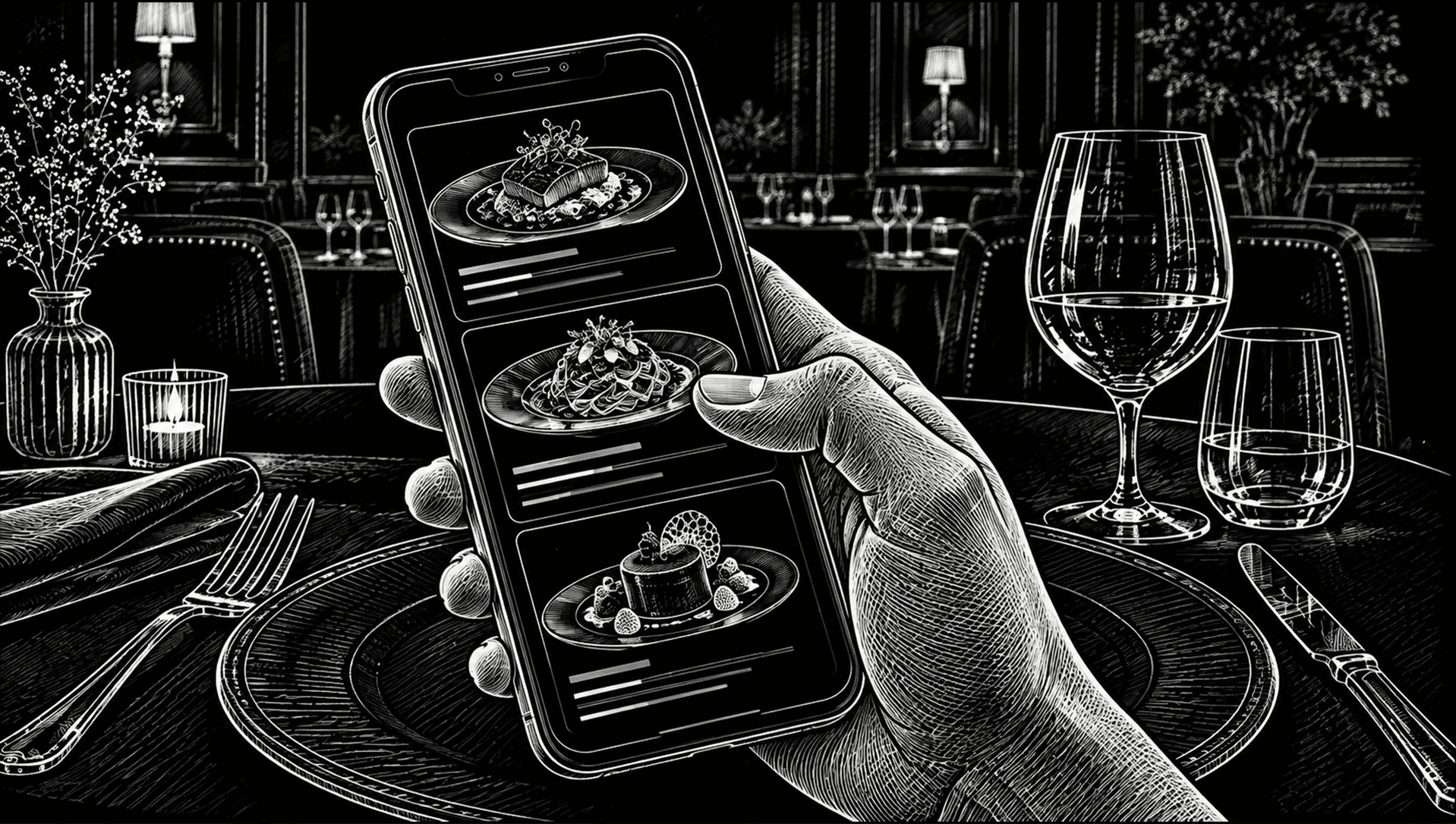
The menu is one of the main reasons people visit a restaurant website. It deserves as much attention as the visual presentation.
Make the menu comfortable to browse on mobile
Organise categories clearly and make dishes, descriptions and prices easy to read on a small screen.
A dedicated menu page lets guests browse directly. A downloadable PDF can be offered alongside it where useful.
Avoid making the menu available only as an image that guests need to repeatedly zoom in on.
Clearly distinguish your different menus
If you offer an à la carte menu, lunch menu or tasting experience, present each one separately. Explain when it is available and whether advance booking is required.
For seasonal menus, keep the website up to date. If you show sample dishes, clearly label them as examples.
Help guests with dietary requirements
Guests may be looking for vegetarian options or have specific dietary requirements.
Keep the information consistent with what your kitchen can provide. Offer a clear way to discuss special requirements before the visit.
Easy reservations that fit how you operate
The booking process should be convenient for guests and manageable for your team.
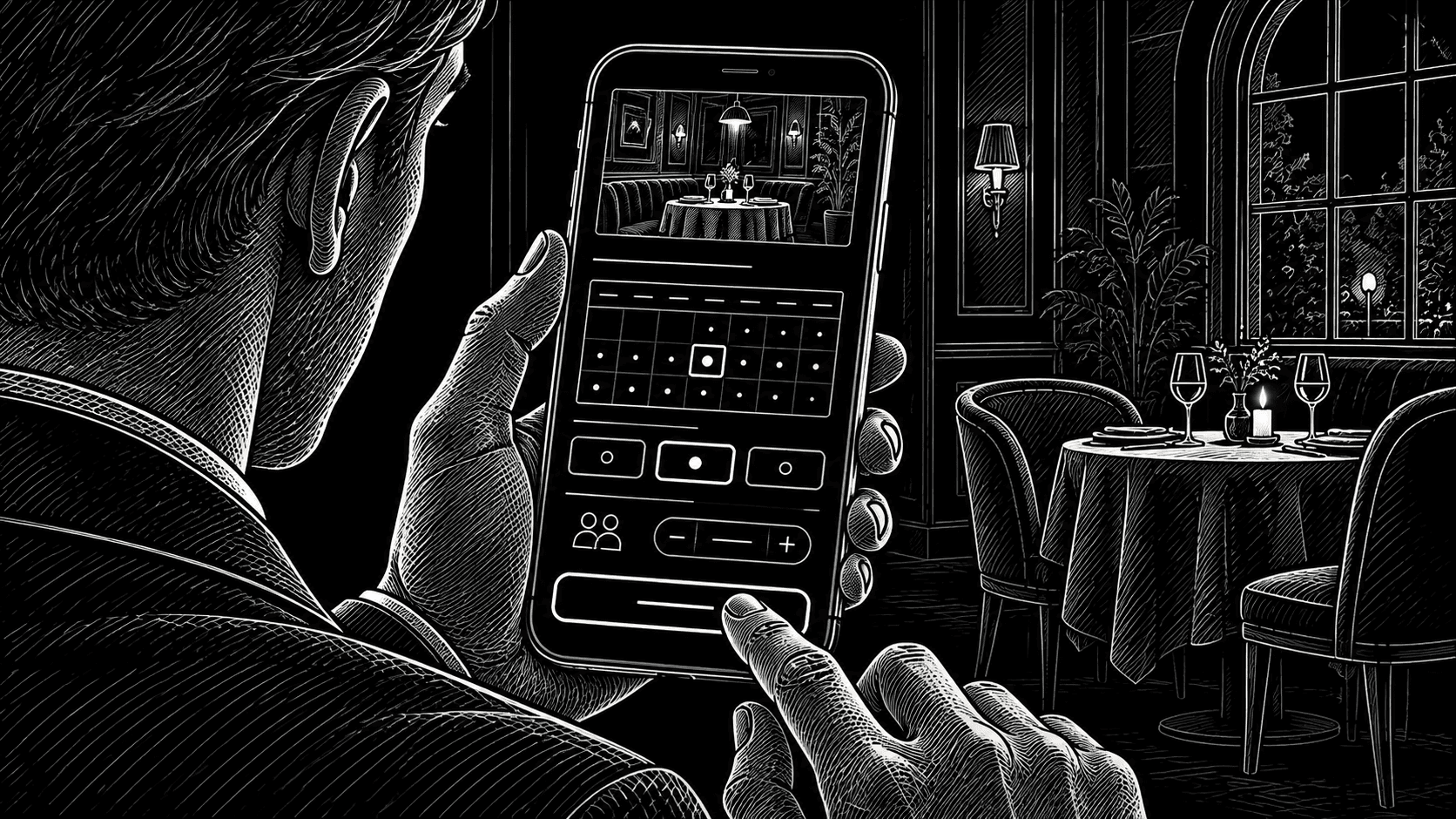
A table request or a confirmed reservation?
If a team member reviews every request, the form should clearly explain that the guest is submitting an enquiry and will receive a response.
With an online reservation system, guests can choose an available time and receive confirmation according to your booking rules.
Keep these processes clearly distinguished. An automated “We’ve received your request” email should not imply that a table has already been reserved.
Collect what you need for the visit
A date, time, party size and contact details are usually enough to start.
You can include an optional field for the occasion or additional requests. More complex enquiries for groups and events can use a separate form.
Keep your existing system where it works well
If you already use a reservation platform, first check how it can connect to your website.
A custom system may be appropriate when you have specific rules for capacity, seating duration, different dining areas or deposits. These requirements should be defined before development begins.
Your own online food ordering and delivery system
The experience with your restaurant can continue beyond the dining room. Your own online ordering system lets customers order directly through your website, without having to use a third-party marketplace.
Orders directly from your menu
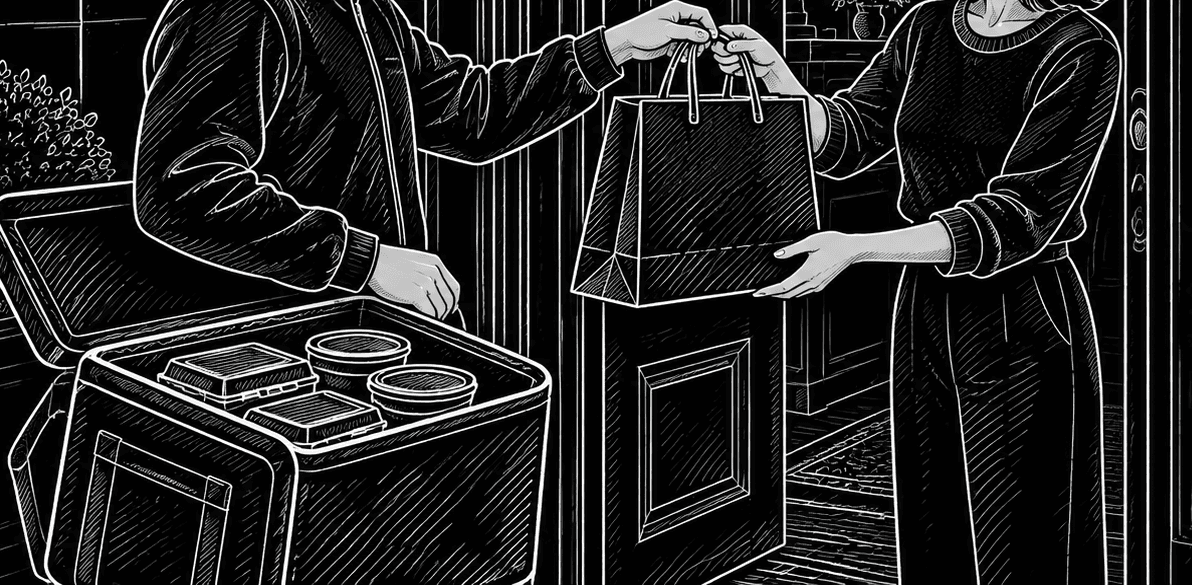
Customers browse your food, select dishes and choose delivery to their address or collection from the restaurant.
Depending on how you operate, the system can include:
- Menu categories, descriptions and customisation options.
- Online payment or payment on receipt.
- Delivery zones, minimum order values and delivery fees.
- Time-slot selection based on available capacity.
- Order confirmation and status updates.
- An administration panel for managing orders and available dishes.
More control over the customer experience
Your own ordering channel lets you define your offers, conditions and communication with customers. Online orders do not have to pass through an external platform.
Direct orders placed through your own system do not incur a marketplace commission. Payment processing, maintenance and delivery fulfilment still have their own costs.
Plan how delivery will work
The website accepts and organises orders. The restaurant needs to arrange preparation, packaging and delivery.
If you want to use your own delivery team, we define the service areas, operating hours and capacity before development. You can also start with collection orders only.
For a premium restaurant, the delivery menu should be selected so dishes retain their quality during transport. Packaging and printed inserts can follow the same brand identity as your restaurant and website.
Practical details are part of good hospitality
Guests should be able to plan their visit with confidence.
Address, opening hours and access
Publish your exact address, current opening hours and easy access to directions.
Where useful, explain the entrance location, parking options and accessibility. If the kitchen closes before the restaurant, make that clear too.
Language versions for international guests
If you welcome international visitors, consider appropriate language versions.
Translations should cover the menu, reservation conditions and practical information. Check the messages guests receive after making an enquiry or booking as well.
Easy updates for your team
Menus, opening hours and special offers change. Define which parts your team needs to update independently.
A suitable administration panel helps keep the website aligned with the restaurant’s day-to-day operation.
A consistent brand identity - from the website to the table
Your website forms part of the restaurant’s overall presentation. The logo, colours, typography and tone should feel connected across every touchpoint.
Logo and visual identity
Your identity needs to work in different settings: on the exterior, on your website, on a business card and on the printed menu.
Alongside the main logo, you may need alternative versions, a colour palette and guidelines for typography and graphic elements.
Printed menus and restaurant materials
The format, layout and materials of a printed menu contribute to the guest experience.
Depending on your needs, the project can include wine lists, special-event menus, gift vouchers, invitations and other printed materials.
The design system should allow updates without requiring a complete redesign every time something changes.
Consistency across your channels
Social media, your website and materials inside the restaurant should all represent the same business.
They can use different layouts and formats while maintaining a recognisable style, accurate information and a consistent voice.
How we approach restaurant projects at Studio Hivenapse
We begin with a conversation about your concept, guests and daily operations.
We define what the website needs to communicate, how menus will be managed and how reservations and orders should work. We then create the custom design and develop the agreed functionality.
Depending on the project, we can provide:
- A custom website presenting your restaurant, cuisine and spaces.
- A mobile-friendly menu that your team can update.
- A reservation form or system configured around your rules.
- Your own online ordering system, with delivery or collection and order management.
- Additional language versions.
- Pages for private events and special offers.
- A complete brand identity, including a logo and visual system.
- Menu and print design.
- Hosting and technical maintenance.
We can work with your existing identity or develop a coordinated concept for your digital presence and printed materials.
Frequently asked questions
Do we need a website if we have an active Instagram profile?
A website provides a consistent place to find your menu, book a table and plan a visit. Social media can direct guests there when they are ready to arrange dinner or an event.
Can we keep our current logo?
Yes. If your identity fits your concept and you have the necessary files, we can use it as the foundation for your website.
Can our team update the menu?
Yes, when content management is included in the scope. We agree which elements you need to edit and provide an administration panel and training.
Can the website use our current reservation system?
We check whether it supports a suitable connection. Depending on its capabilities, this could involve a booking button, an embedded interface or an integration.
Can we accept food orders without an external platform?
Yes. We can build a direct ordering channel through your website. We define the menu, payments and conditions for delivery or collection. Your restaurant arranges delivery fulfilment.
Can you design our printed menu too?
Yes. We can develop the website, brand identity and print materials as one project or work on a specific part according to your needs.
Bring the same attention to detail to your website
Your guests should be able to get a feel for your restaurant, explore the menu and easily plan a visit or place an order. Tell us about your restaurant and what you would like to improve. We will discuss the right presentation, required functionality and opportunities for a consistent brand identity.
Discuss your project with Studio Hivenapse